
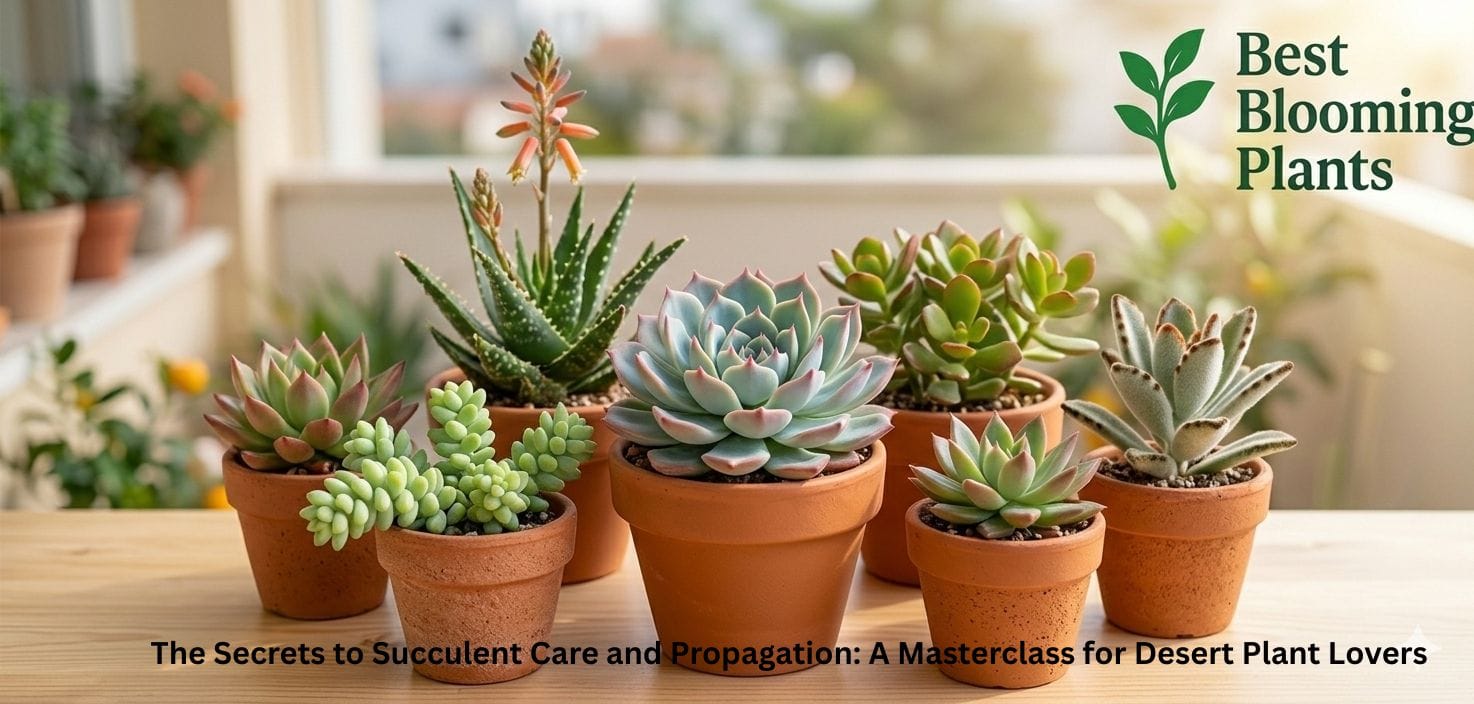

Succulents are the superstars of the modern indoor garden. With their geometric beauty, fleshy leaves, and “hard-to-kill” reputation, they are the first plant a beginner usually buys. But here is the secret that most garden centers won’t tell you: Succulents aren’t actually “easy”—they are just different. They are desert survivalists, and when you treat them like a regular tropical houseplant, they will perish.
If you have ever killed a succulent by “loving it too much” (overwatering), this guide is for you. We are going to deconstruct the biology of these plants, master the watering cycle, and teach you how to turn one single leaf into a forest of new succulents.
1. The Physiology of a Succulent: Why They Need Special Care
Succulents have evolved to live in environments where water is scarce. They have specialized tissues (fleshy leaves and stems) that store water for months. When you keep the soil wet constantly, these plants don’t know how to handle it. Their roots—which are designed to seek moisture in dry sand—will suffocate and rot.
Pro Tip: Always remember that a succulent is a desert plant. It prefers dry air, intense light, and soil that drains in seconds.
2. Soil Science: The Foundation of Succulent Success
As we discussed in our comprehensive Indoor Plant Fertilizer & Soil Science Guide, soil isn’t just “dirt.” For succulents, the soil must be “gritty.”
-
The Ideal Mix: Do not use plain potting soil. Your mix should be 50% organic matter (peat moss/compost) and 50% inorganic material (Perlite, Pumice, or coarse sand).
-
Why Perlite? It creates air pockets that allow oxygen to reach the roots. If you remove oxygen, you get Root Rot.
-
The Pot Matters: Terracotta (clay) pots are the gold standard for succulents. They are porous, meaning they allow the soil to “breathe” and wick away excess moisture.
3. Sunlight Mastery: Understanding “Etiolation”
Have you ever seen a succulent that looks like it is stretching out, getting tall, thin, and pale? This is called Etiolation. The plant is starving for light and is “reaching” for a window.
-
Sunlight Needs: Most succulents need at least 6 hours of bright, indirect sunlight daily.
-
Sunburn: If you move a succulent from a dark shelf directly into the hot afternoon sun, it will get sunburned (brown, crispy patches). Move them gradually over a week.
-
Grow Lights: If you live in a dark apartment, a simple LED grow light can save your succulent collection.
4. The “Soak and Dry” Watering Method
The #1 cause of death for succulents is the spray bottle. Stop misting your succulents! Misting only creates humidity on the leaves, which can lead to fungal issues and does nothing for the roots.
The Golden Method:
-
Check: Stick your finger one inch into the soil. If it is even slightly damp, do not water.
-
Soak: When the soil is 100% bone-dry, pour water over the soil until it runs out the drainage hole.
-
Drain: Never let your succulent sit in a saucer of standing water. Empty that saucer immediately.
5. Propagation Masterclass: Creating Life from Leaves
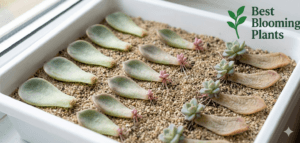
This is the magic of succulents. You can grow a whole new plant from a single leaf. Here is your step-by-step masterclass:
| Step | Action | The Science Behind It |
| 1. The Pluck | Twist a healthy leaf gently off the stem. | Must have a clean break; do not tear the leaf. |
| 2. The Callus | Lay the leaf on a tray for 3-5 days. | The end must scab over to prevent rot when it touches soil. |
| 3. The Soil | Lay the leaf on top of dry cactus soil. | Do not bury the leaf; it needs light. |
| 4. The Roots | After 2 weeks, pink roots will emerge. | Mist the soil around the roots once a week now. |
| 5. The Baby | A tiny plant will sprout at the tip. | The mother leaf will shrivel as it gives energy to the baby. |
6. Troubleshooting: When Things Go Wrong
Even with the best care, pests can happen.
-
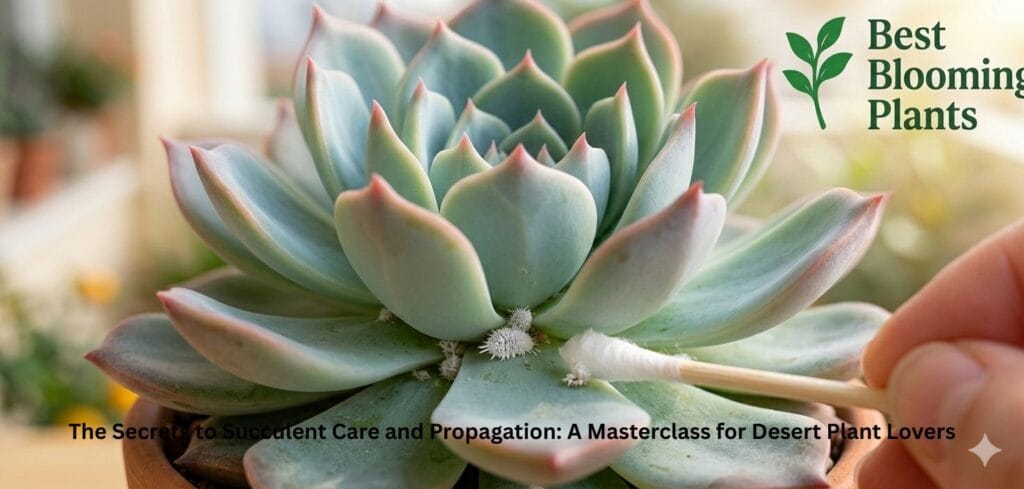
Mealybugs: Look for white, cotton-like fluff in the crevices of the leaves.
-
Fix: Dip a cotton swab in rubbing alcohol and dab it directly on the bugs.
-
-
Mushy/Translucent Leaves: This is a sign of severe overwatering.
-
Fix: Pull the plant out, check the roots. If they are black/mushy, cut them off and repot in fresh, dry soil.
-
-
Wrinkled Leaves: If the leaves are wrinkled and the soil is dry, the plant is dehydrated. It needs a good soaking.
7. Choosing the Right Variety
If you are a beginner, don’t start with rare, finicky species. Start with these reliable “Tanks”:
-
Echeveria: The rose-shaped beauty.
-
Jade Plant: A tree-like succulent that can live for 50+ years.
-
Aloe Vera: Beautiful and medically useful for skin.
-
Snake Plant: As highlighted in our Snake Plant Care Guide, this is practically immortal.
Conclusion: Patience is the Best Fertilizer
Succulents teach us to slow down. They don’t rush, and neither should you. By mastering the light and the “Soak and Dry” watering method, you aren’t just keeping a plant alive—you are cultivating a piece of the desert. Keep them dry, keep them bright, and watch them thrive.