
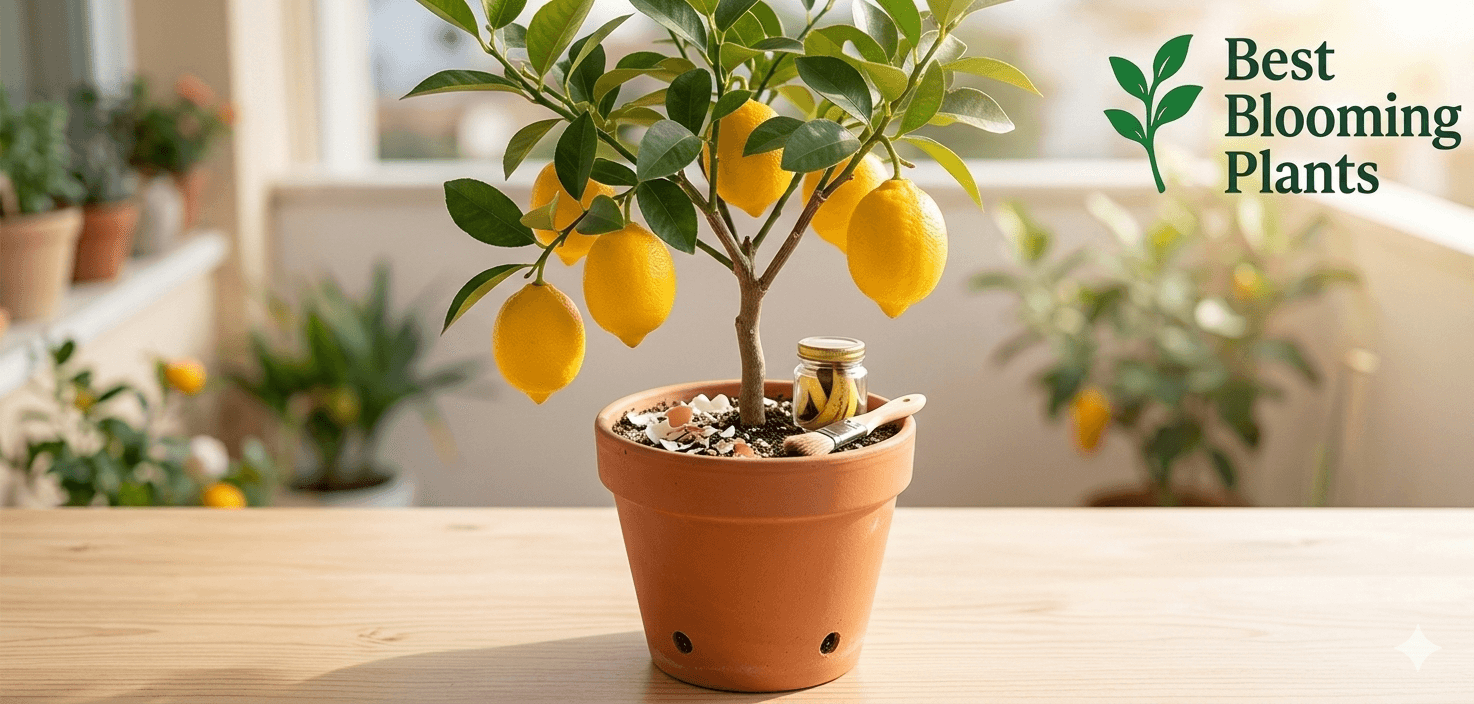

There is nothing quite as rewarding as picking a fresh, sun-ripened lemon from your own balcony or patio. While many people think citrus trees only belong in large orchards, growing a Lemon Tree in a pot (Container Gardening) is surprisingly easy and highly productive. Whether you have a sunny balcony or a small backyard, you can enjoy fragrant blossoms and sour, juicy fruits.
1. Choosing the Right Variety for Containers
Not all lemon trees are suitable for pots. If you plant a standard lemon tree, it will quickly outgrow its container. For the best results, you should look for “Dwarf” varieties.
-
Meyer Lemon: The most popular choice for home gardeners. It is a cross between a lemon and a mandarin orange, making it sweeter and more cold-tolerant.
-
Eureka Lemon: The classic supermarket lemon. Dwarf versions grow beautifully in large pots.
-
Ponderosa Lemon: Known for producing massive, heavy fruits on small, manageable trees.
2. The Perfect Pot and Soil Mix
As we discussed in our Indoor Plant Fertilizer & Soil Guide, drainage is the most important factor.
-
Pot Material: Glazed ceramic or plastic pots are better than terracotta for lemons because citrus trees like to stay slightly moist and don’t like drying out too fast.
-
Soil Requirements: Use a high-quality “Citrus & Cactus” mix. Lemon trees love a slightly acidic soil pH (5.5 to 6.5).
3. Sunlight: The Fuel for Fruit
Lemon trees are “Sun Worshippers.” They need at least 8 to 12 hours of direct sunlight every day to produce fruit.
-
Placement: Place your pot in the sunniest spot of your house.
-
Artificial Light: If you live in a cold climate and move your tree indoors for winter, you will need a “Grow Light” to keep it healthy.
4. Watering and Humidity Science
Citrus trees have a specific watering rhythm. They hate “wet feet” but love “consistent moisture.”
-
The Deep Soak: Water your tree until water runs out of the drainage holes.
-
Humidity: Dry indoor air can cause the leaves to fall off. Mist the tree regularly or use a pebble tray during the winter months.
5. Feeding Your Lemon Tree (NPK for Fruit)
Fruit-bearing trees are “Heavy Feeders.” They need more nutrition than a regular Snake Plant.
| Season | Fertilizer Type | Frequency |
| Spring | High Nitrogen (N) for new leaves | Every 4 weeks |
| Summer | Balanced N-P-K (10-10-10) | Every 3 weeks |
| Winter | No Fertilizer (Dormancy) | Stop Feeding |
6. Pollination: How to Get Fruit Indoors
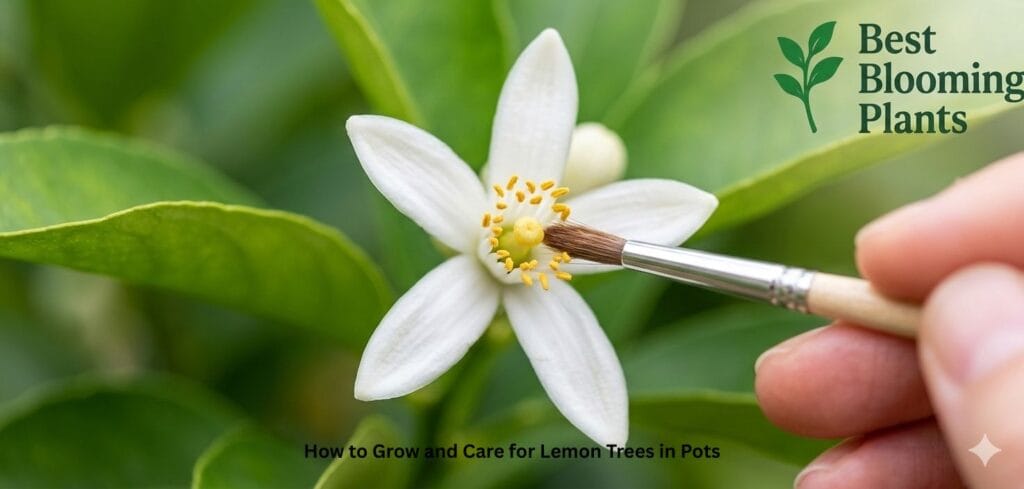
If your lemon tree is indoors, there are no bees to move pollen from flower to flower. You must become the bee!
-
Hand Pollination: Use a small paintbrush or a cotton bud. Gently rub the inside of a flower to collect yellow pollen and move it to the center of another flower. This ensures your tree actually produces lemons instead of just flowers.
7. Common Problems: Yellow Leaves and Pests
-
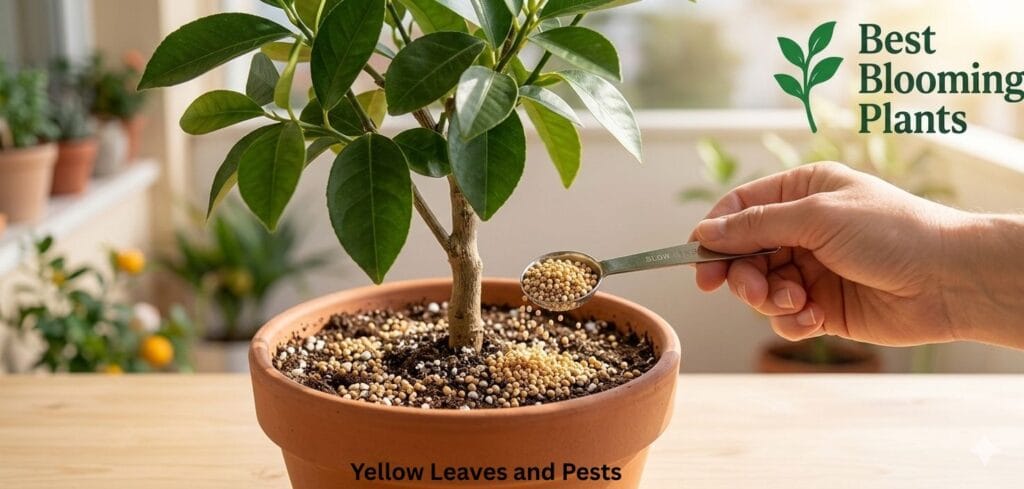
Yellow Leaves: Usually a sign of Iron Deficiency or overwatering.
-
Spider Mites: As we saw in our Kalanchoe Guide, dry air attracts mites. Keep the humidity high to protect your citrus.
Conclusion
Growing a lemon tree is a marathon, not a sprint. It takes patience to see those first green nubs turn into bright yellow fruits, but the scent of citrus blossoms in your home makes it all worth it.