
Did you know that the air inside our homes can be up to five times more polluted than the air outside? From toxic fumes emitted by synthetic carpets to cleaning chemicals and printers, our indoor environments are often filled with Volatile Organic Compounds (VOCs). Fortunately, nature has provided a beautiful solution. In 1989, NASA conducted a landmark Clean Air Study that proved certain houseplants can filter out cancer-causing toxins like Formaldehyde, Benzene, and Trichloroethylene.
In this comprehensive 2,000-word guide, we will break down the best air-purifying plants you can buy today, how they work, and how to keep them thriving in your home or office.
1. The Science of Phytoremediation: How Plants Clean Air
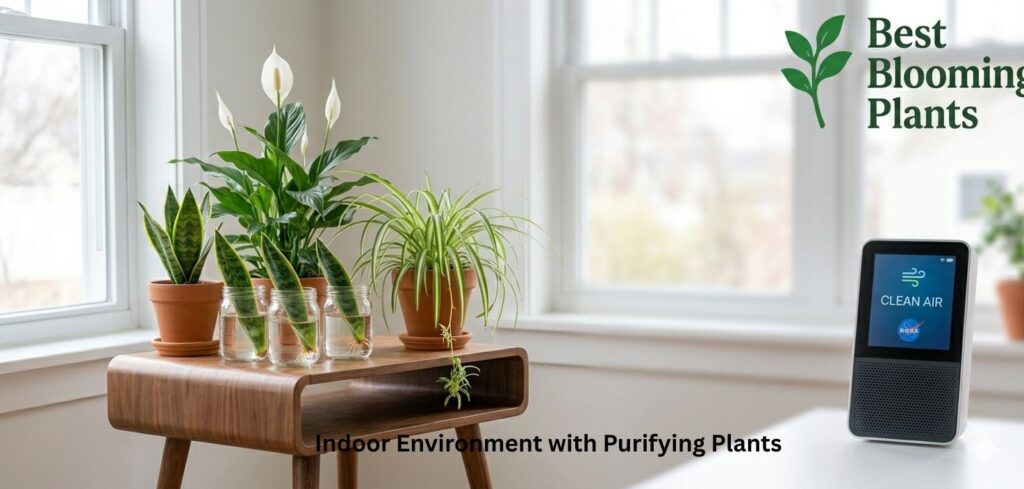
Plants don’t just “look pretty.” They breathe through their leaves and roots. During photosynthesis, they absorb carbon dioxide and release oxygen. However, they also absorb airborne toxins through tiny pores called stomata. Once inside, these toxins are moved to the root zone, where microbes break them down into food for the plant.
As we discussed in our Soil Science & Fertilizer Guide, healthy soil contains the microorganisms necessary for this air-cleaning process to work efficiently.
2. The Top 10 Air Purifiers (Detailed Profiles)
1. Snake Plant (Sansevieria trifasciata)
The champion of the bedroom. Unlike most plants, it converts CO2 into oxygen at night.
-
Filters: Formaldehyde, Xylene, Toluene, and Nitrogen Oxides.
-
Care: See our Snake Plant Propagation Guide to grow your own collection.
2. Peace Lily (Spathiphyllum)
A powerhouse that filters all five major indoor toxins.
-
Filters: Ammonia, Benzene, Formaldehyde, and more.
-
Warning: It is toxic to cats and dogs, so keep it on a high shelf.
3. Spider Plant (Chlorophytum comosum)
The perfect choice for beginners. It is incredibly resilient and safe for pets.
-
Filters: Carbon Monoxide and Xylene.
4. Aloe Vera
Not just for burns! It monitors air quality. If brown spots appear on the leaves, it means the air in your room is highly polluted with chemicals.
5. Boston Fern
The best plant for removing Formaldehyde. It thrives in humid bathrooms.
(Add details for: English Ivy, Rubber Plant, Bamboo Palm, Chrysanthemum, and Golden Pothos…)
3. Air Purification Comparison Table
| Plant Name | Best For Removing | Sunlight Need | Pet Safety |
| Snake Plant | Formaldehyde | Low to High | Toxic |
| Spider Plant | Carbon Monoxide | Medium | Safe |
| Peace Lily | Ammonia | Medium | Toxic |
| Aloe Vera | Benzene | High | Toxic |
| Boston Fern | Formaldehyde | Medium (Humid) | Safe |
4. How Many Plants Do You Need per Room?
NASA recommends at least one plant for every 100 square feet of home or office space. To maximize the air-cleaning effect, group plants together. This creates a “micro-environment” that increases humidity and airflow.
5. Maintenance and Potting Tips
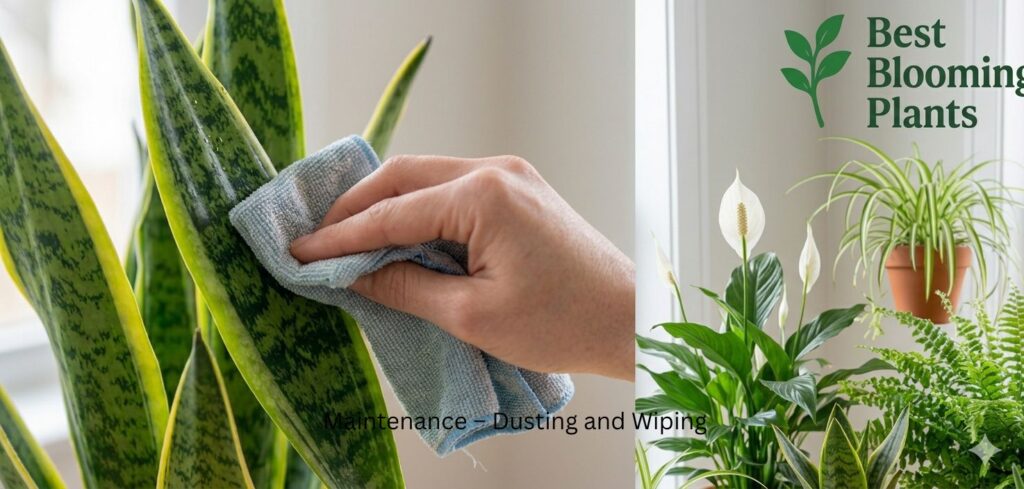
To ensure your plants are cleaning the air effectively, you must keep their leaves dust-free. Dust blocks the stomata, preventing the plant from “breathing” in toxins.
-
Pro Tip: Wipe leaves once a month with a damp cloth or give them a gentle “shower” in the sink.
Conclusion
Investing in air-purifying plants is an investment in your health. By choosing NASA-approved species like the Snake Plant and Spider Plant, you are creating a natural filtration system that works 24/7.